
On April 1, 2023, the final blast of the Blasting and Debris Removal Works for the Water Intake and Outfall Facilities of the Supporting Wharf at the Wenzhou LNG Receiving Station Project, undertaken by our company, was successfully completed. Debris removal was completed on April 29, followed by acceptance and handover by the client. This marked the successful completion of the nine-month project.
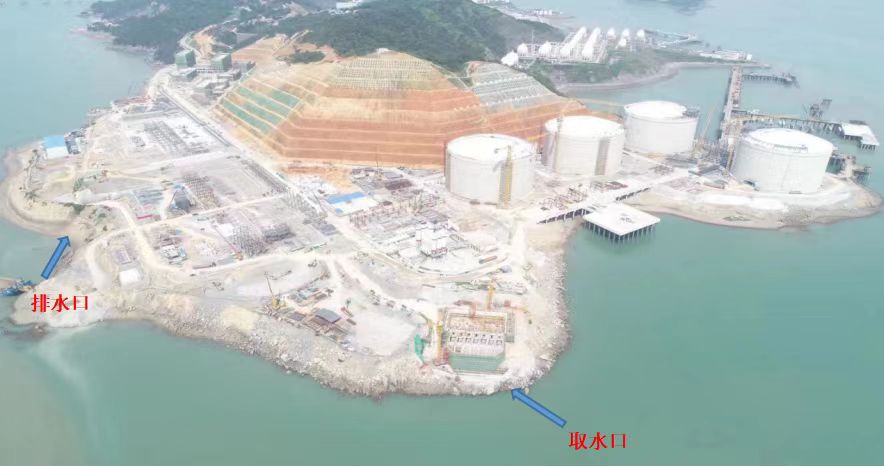
The project is located in the waters west of Huaiweiju Headland at the eastern end of Xiaomen Island, Wenzhou, Zhejiang Province. It is designed to handle 3 million tonnes of LNG per year and includes the construction of an LNG terminal capable of accommodating vessels ranging from 80,000 to 266,000 m³.The blasting works mainly involved drilling and blasting, as well as rock excavation and removal, for the water intake and outfall facilities of the circulating water pump house and the LNG berth area. At the water intake, the existing concrete pump house and intake structures were approximately 1 m from the nearest natural rock face. The western side of the outfall blasting area was approximately 5 m from the sluice gate. To the southwest, the blasting area was approximately 11 m horizontally and 8 m vertically from the power lines, approximately 36 m from the transformer, and approximately 51 m from the electrical distribution room. It was approximately 196 m from the steel structure foundation under construction to the west and approximately 98 m from the material storage shed to the northwest. These close-proximity conditions made the blasting environment particularly complex.
Based on the terrain and site conditions, excavation of the intake and outfall foundation pits was divided into onshore blasting excavation of the cofferdam and underwater blasting excavation of reef rock. In view of the specific characteristics of the project, our company adopted a technical approach featuring closely spaced deep holes, zone-based charge variations, protection using both rigid and flexible materials, and the use of tidal fluctuations to reduce flyrock for the cofferdam blasting and demolition works. For the underwater reef excavation, we adopted a hole-by-hole initiation technique using a blasting vessel for underwater deep-hole blasting.
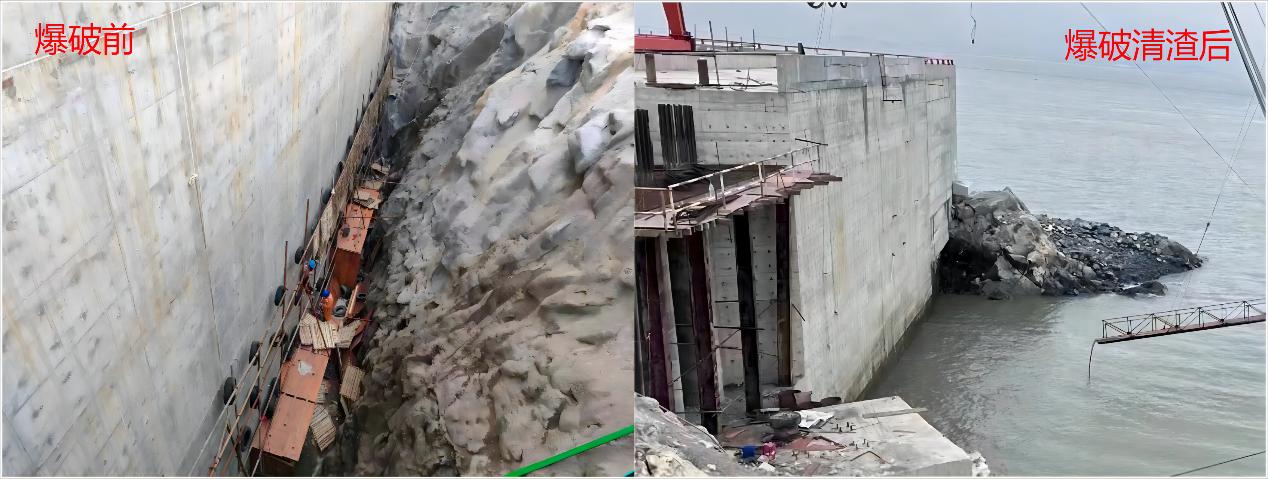
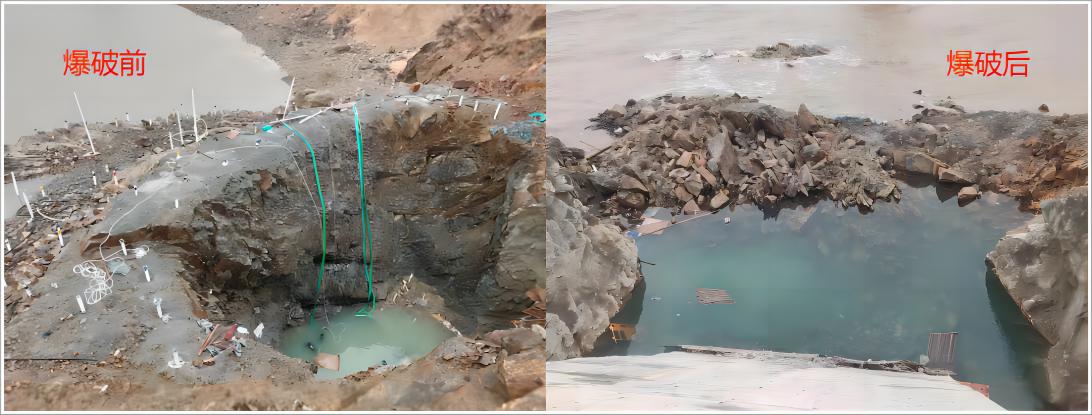
Following completion of the blasting works, the blasted areas were repeatedly surveyed by sonar to confirm that there were no shallow spots or residual rock. Inspections of the surrounding buildings and other protected structures also found no signs of damage, confirming the successful completion of the blasting works.Throughout the construction process, project personnel worked closely together and maintained proactive communication with the client. Their strong teamwork demonstrated the company’s collaborative spirit while showcasing its high level of technical expertise in blasting. The quality of the excavation works also met the client’s requirements and received unanimous recognition from the client, relevant authorities, and cooperating partners.