
At 17:38 yesterday, the 300,000-ton dock cofferdam demolition blasting project at the Zhoushan Xintai West Bailian Green Maritime Engineering Manufacturing and Operation Base, undertaken by Zhejiang High-Energy Blasting Engineering Co., Ltd., was successfully initiated on Xibailian Island in the southern waters of the Zhoushan Archipelago.
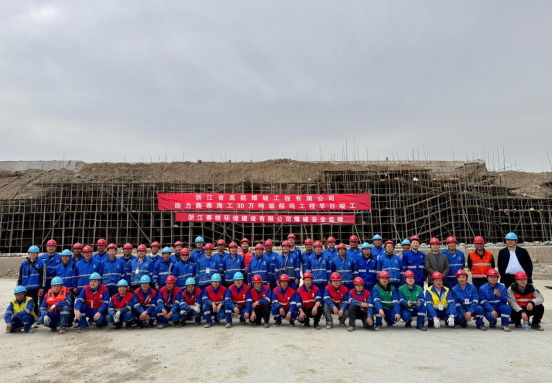
This blasting project achieved a construction scale of 605 boreholes, with a total drilling depth of nearly 10,000 meters and an explosive charge of approximately 45 tons. While ensuring full disintegration of the cofferdam, the project successfully kept harmful effects including blasting vibration, underwater shock waves, and flyrock strictly within safety limits, perfectly achieving the dual objectives of precision, efficiency, safety, and reliability. This accomplishment not only cleared the critical path for the dock to commence operation on schedule, but also once again demonstrated our company's formidable technical capabilities and refined construction standards in the field of complex offshore composite cofferdam demolition blasting.
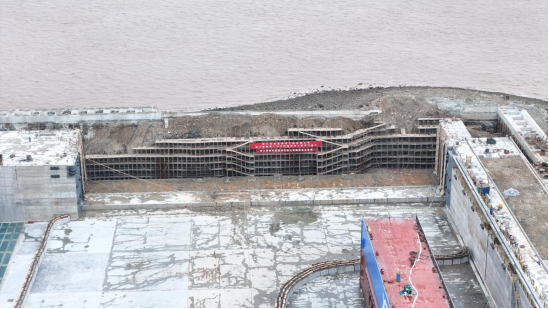
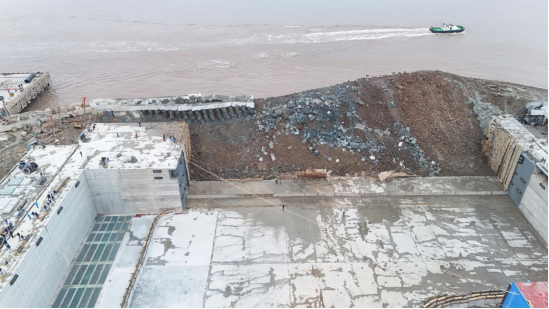
The Zhoushan Xintai West Bailian Green Maritime Engineering Manufacturing and Operation Base 300,000-ton dock project is a key maritime engineering project for Zhoushan's marine economic development. The dock measures 688m (length) × 119.6m (width) × 14.9m (depth), and upon completion will serve as a significant regional hub for green maritime engineering manufacturing and operations. The cofferdam demolition blasting and reef blasting/clearance operations covered a maximum east-west distance of approximately 277m and a maximum north-south distance of approximately 80m. The project faced multiple compound challenges:
Complex surrounding environment: The blast area was surrounded by various protected structures including wharves, dock piers, stainless steel linings, and pump rooms, imposing stringent requirements for controlling all types of hazardous effects.
Composite cofferdam structure: The cofferdam featured a composite structure integrating double-row rock-socketed piles, plain concrete retaining walls, and natural rock ridges, with diverse materials and strong structural integrity, making disintegration via blasting exceptionally difficult.
Adverse island conditions: Located on an offshore island, the project was subject to complex meteorological and hydrological conditions, with monsoons and tidal variations significantly impacting construction. Moreover, detailed topographical and geological data for the cofferdam and reef areas were insufficient, introducing numerous uncertainties into drilling, charging, and other construction processes.
Demanding blasting network requirements: To strictly control the charge weight per delay, a single-hole, single-shot, in-hole segmented initiation network was required. Additionally, offshore construction imposed special requirements on blasting equipment regarding water resistance, pressure resistance, and corrosion resistance.
Large scale and tight schedule: The project involved substantial workload and a compressed timeline, with multiple processes — drilling, safety protection, and underwater muck removal — proceeding concurrently, making construction organization and coordination extremely challenging.
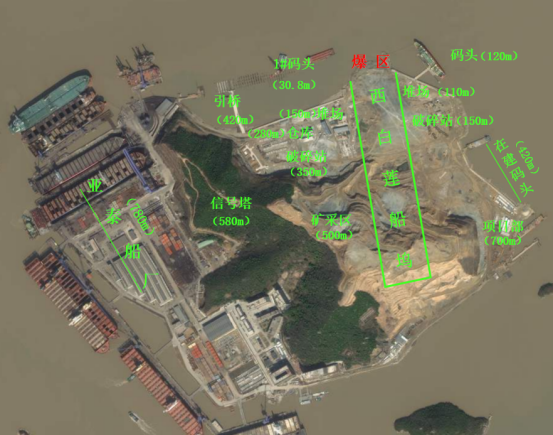
"Breaking Through Challenges with Technology, Ensuring Safety with Craftsmanship"Faced with these numerous challenges, our company's technical team maintained a rigorous and scientific approach, methodically developing targeted solutions.Design Phase: Leveraging surveying results from unmanned aerial vehicles (UAVs) and unmanned surface vessels (USVs), the team determined the adoption of gently inclined boreholes + blasting without water filling inside the cofferdam to achieve full disintegration in a single blast, with the bottom elevation meeting design requirements in one pass. For the composite cofferdam structure, differentiated blasting parameters were designed: the bedrock section employed gently inclined boreholes in parallel and fan-shaped patterns, while artificial structures such as cast-in-place piles and wave walls used vertical boreholes. At the blast boundaries, double-row gently inclined pre-split boreholes and dense empty holes were used to achieve precision boundary formation through controlled blasting techniques, minimizing damage to the retained rock mass.
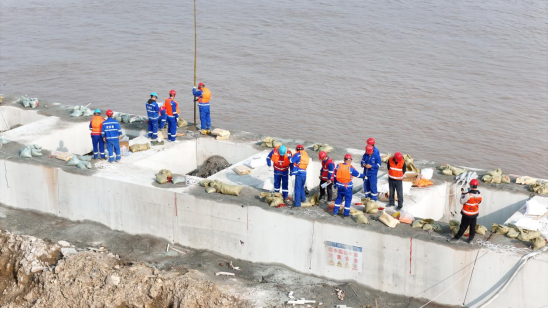
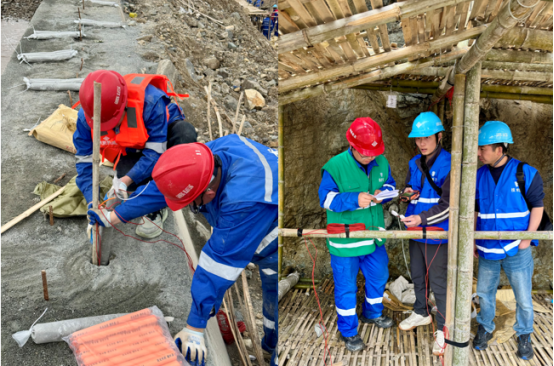
Construction Phase: The team overcame the challenge of controlling drilling accuracy for ultra-long gently inclined boreholes. By establishing a digital twin model of the cofferdam structure, boreholes were precisely positioned and drill angles were verified through multiple rounds of calibration to ensure drilling accuracy. Customized cylindrical emulsion explosives and high-strength waterproof and tensile industrial electronic detonators were developed to ensure reliable initiation under complex offshore conditions. A "top-down, middle-open" V-shaped initiation network was adopted, with strict limits on the maximum charge weight per delay. Scientific calculations confirmed that hazardous effects including blasting vibration and underwater shock waves remained below safety standards. A multi-layered safety protection system was established, with targeted protection measures for critical structures including the dock sill, dock floor, and pump room. Additionally, a dedicated protection plan was formulated for the pile foundations of the No. 1 wharf on the west side, employing "double-row pre-split boreholes + vibration-reduction boreholes" combined controlled blasting technology, augmented by borehole offset and loosening blasting techniques to further attenuate blasting vibration, ensuring comprehensive protection of the pile foundations.
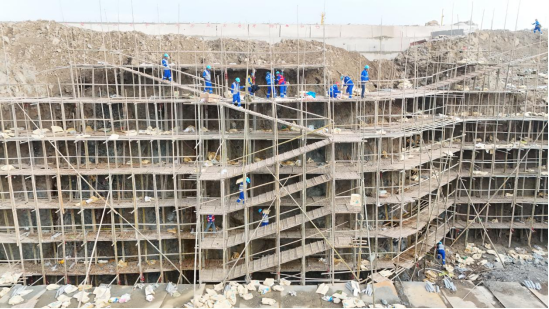
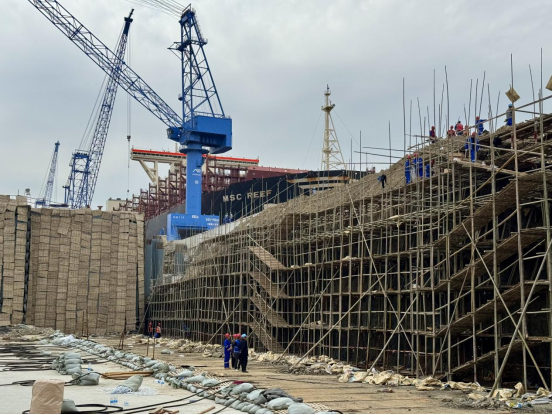
This cofferdam blasting project on Xibailian Island represents yet another benchmark achievement for our company in the field of offshore cofferdam demolition blasting. Over the years, our company has undertaken nearly 20 dock cofferdam demolition blasting projects of various structural types, and has received multiple technical awards including the China Blasting Industry Association's Science and Technology Progress Special Prize and First Prize. In the field of marine engineering blasting, we have accumulated extensive experience in cofferdam demolition blasting under complex offshore conditions and with complex structural configurations.As a National High-Tech Enterprise, the company holds comprehensive core qualifications including Class I General Contracting for Mine Engineering Construction and Class I Blasting Operations. Backed by a professional technical team, standardized construction processes, and innovative blasting solutions, we continue to achieve breakthroughs in the field of engineering blasting, building industry recognition through technical excellence. Looking ahead, our company will remain true to our professional mission, deepen our presence in the core field of engineering blasting, and continue to drive technological innovation and service upgrades. We are committed to contributing more "High-Energy Wisdom" and "High-Energy Strength" to the development of the marine economy and the construction of key infrastructure projects through superior blasting solutions and a steadfast commitment to excellence.