
— Marking the First Application of Digital Electronic Detonators in Blasting Demolition Projects in Zhejiang Province
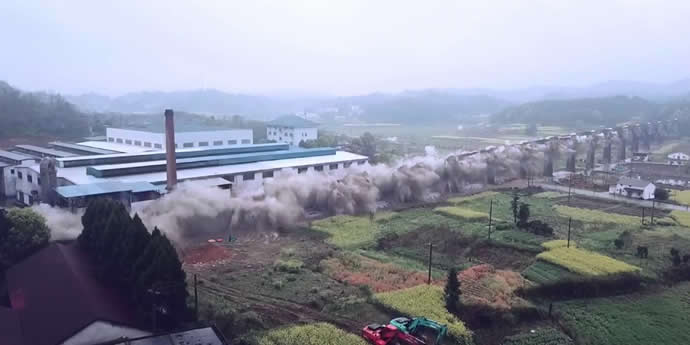
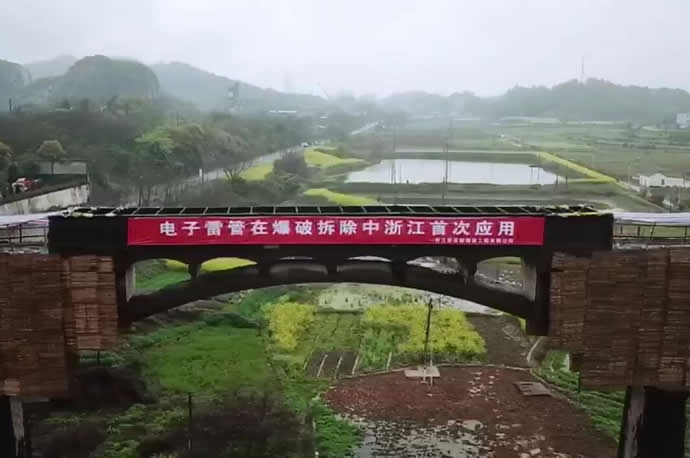
At 9:30 a.m. on April 3, 2019, following the detonation command, Zhejiang Gaoneng Blasting Engineering Co., Ltd. successfully carried out the blasting demolition of the Longmen Bridge Aqueduct using digital electronic detonators. All digital electronic detonators used in this project were provided by Guizhou Panjiang Civil Explosives Co., Ltd. This marked the first application of digital electronic detonators in the field of blasting demolition in Zhejiang Province.
The Longmen Bridge Aqueduct in the Tongshanyuan Reservoir Irrigation District of Longyou County, Quzhou City, was constructed in April 1976 and put into operation in October 1978. Over its 40 years of safe operation, it has ensured agricultural irrigation and ecological water supply for nearly 60,000 mu of farmland in northern Quzhou. The aqueduct has fully served its intended function, while also preserving the essence of the water conservancy construction techniques and cultural heritage of that era. It has become deeply connected with the daily lives and memories of local residents.
After comprehensive consideration of long-term planning and safety issues, the management authority decided to demolish the upper structure of the aqueduct by controlled blasting while retaining the existing piers.
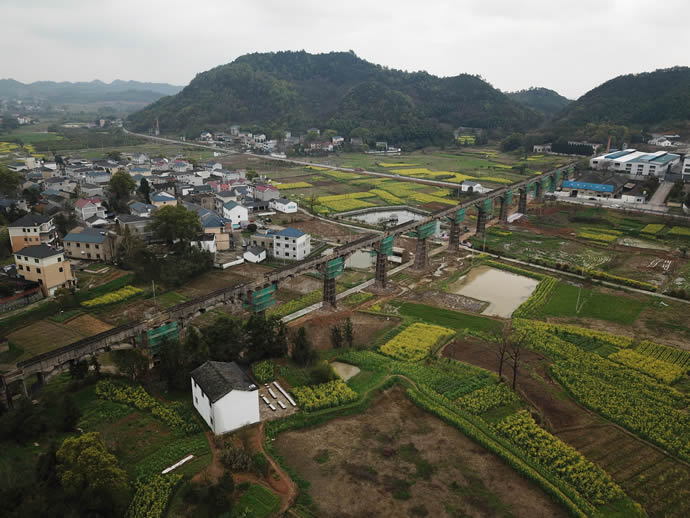
The Longmen Bridge Aqueduct has a total length of 567 m and consists of the aqueduct trough, a lightweight reinforced double-curvature arch supporting structure, and masonry gravity piers. The section to be demolished by blasting was a 510 m-long rib-arch aqueduct, comprising 17 spans, each 30 m in length, with a maximum height of 19.4 m.
Sixteen aqueduct piers were required to remain intact, and their continued use in the reconstruction project had to be ensured. The surrounding environment for the blasting operation was extremely complex. Along the 180 m southern section, a factory building ran parallel to the west side of the aqueduct. The closest distance to the factory perimeter wall was only 0.6 m, while the distance to its chimney was merely 3 m. Along the 210 m northern section, residential houses in Longmenqiao Village were located 14 m away on the eastern side. In addition, dozens of buried pipelines crossed beneath multiple spans of the aqueduct.
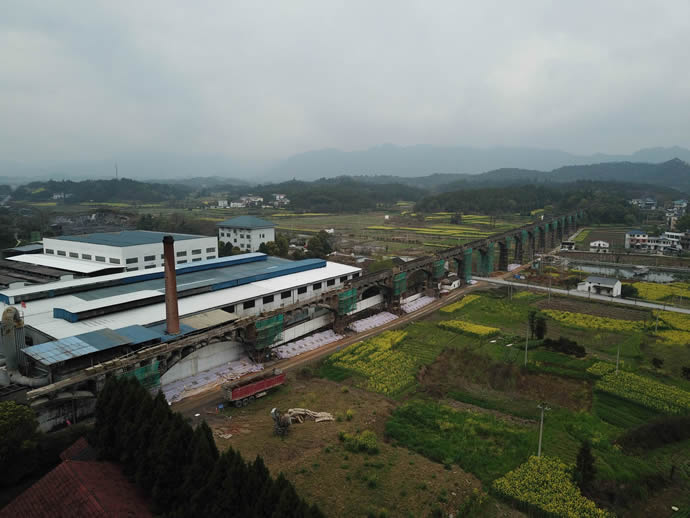
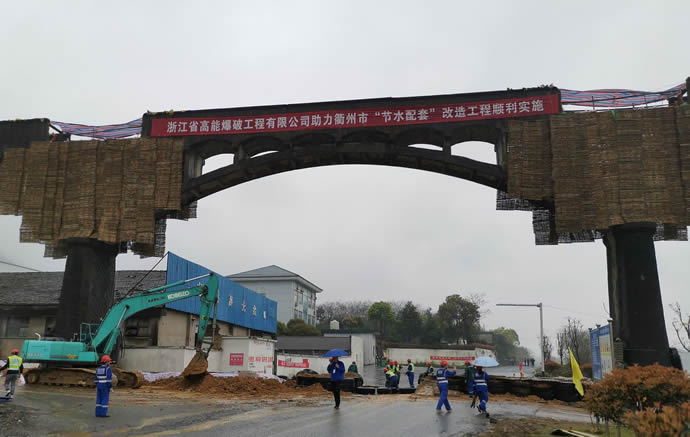
To ensure the safety of the aqueduct piers and minimize the impact of blasting-induced hazards on the surrounding environment, numerical simulations were conducted during the initial stage of the blasting scheme design to optimize the initiation sequence and delay intervals. The resulting blast-induced vibrations and collapse vibrations were calculated and analyzed. Finally, a “multi-zone, multi-delay” initiation network was adopted to overcome the technical challenges of the project. A total of 1,484 blast holes were drilled through the arch ribs and vertical walls of the aqueduct structure. The operation used 203.4 kg of explosives and 1,484 digital electronic detonators. The blasting area was divided into 25 independent zones, with a total delay duration of 2 seconds. After blasting, the upper structure of the aqueduct collapsed vertically onto the ground without causing structural damage to the piers. Monitoring data from a third-party inspection agency confirmed that the demolition blasting had no adverse impact on the surrounding environment. The blasting operation was successfully completed and received unanimous recognition from the project owner and local residents.
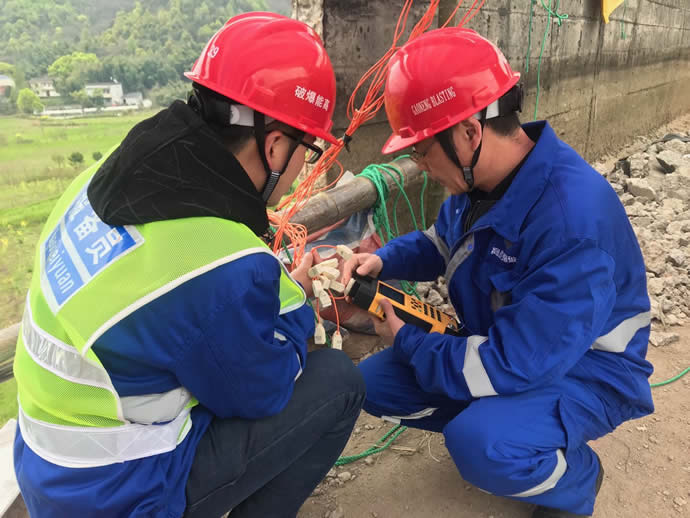
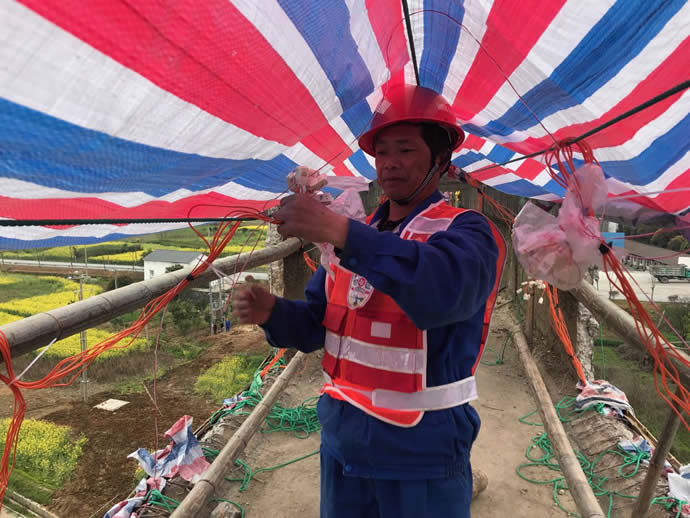
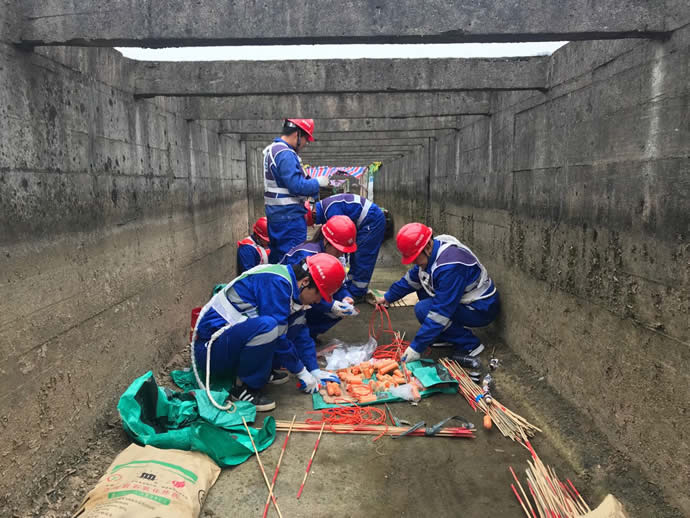
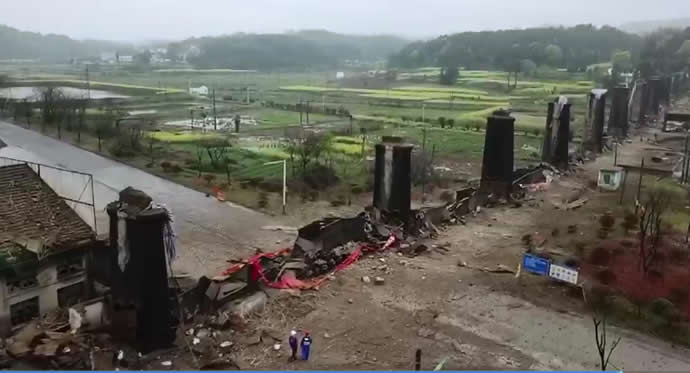
The successful application of digital electronic detonators in the blasting demolition of the Longmen Bridge Aqueduct demonstrated the consistently outstanding technical expertise and innovative spirit of the Gaoneng team. It marked the first successful application of digital electronic detonators in the field of blasting demolition in Zhejiang Province, achieving a “zero breakthrough” in this area.
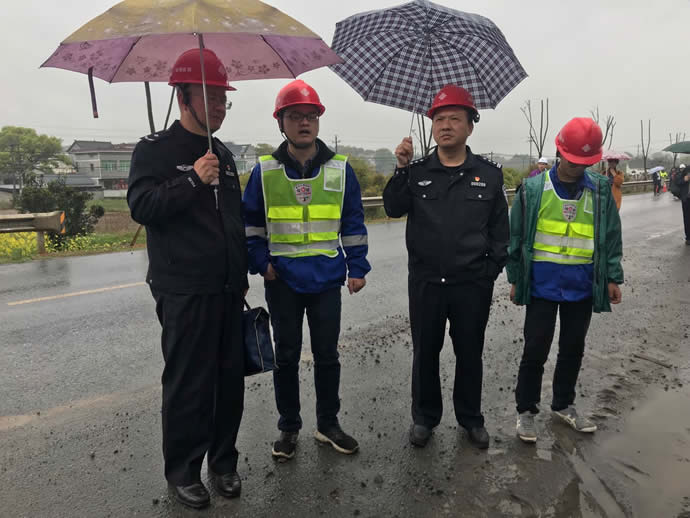
The project received strong support from the Tongshanyuan Reservoir Management Bureau of Quzhou City, while also gaining high recognition and praise from the Zhejiang Provincial Public Security Department, as well as public security authorities in Quzhou City and Longyou County.
Our company will continue to actively respond to and implement the requirements of the Ministry of Industry and Information Technology Document No. 237 [2018], accelerate the promotion and application of digital electronic detonators, and contribute to the high-quality and sustainable development of China’s civil explosive industry.